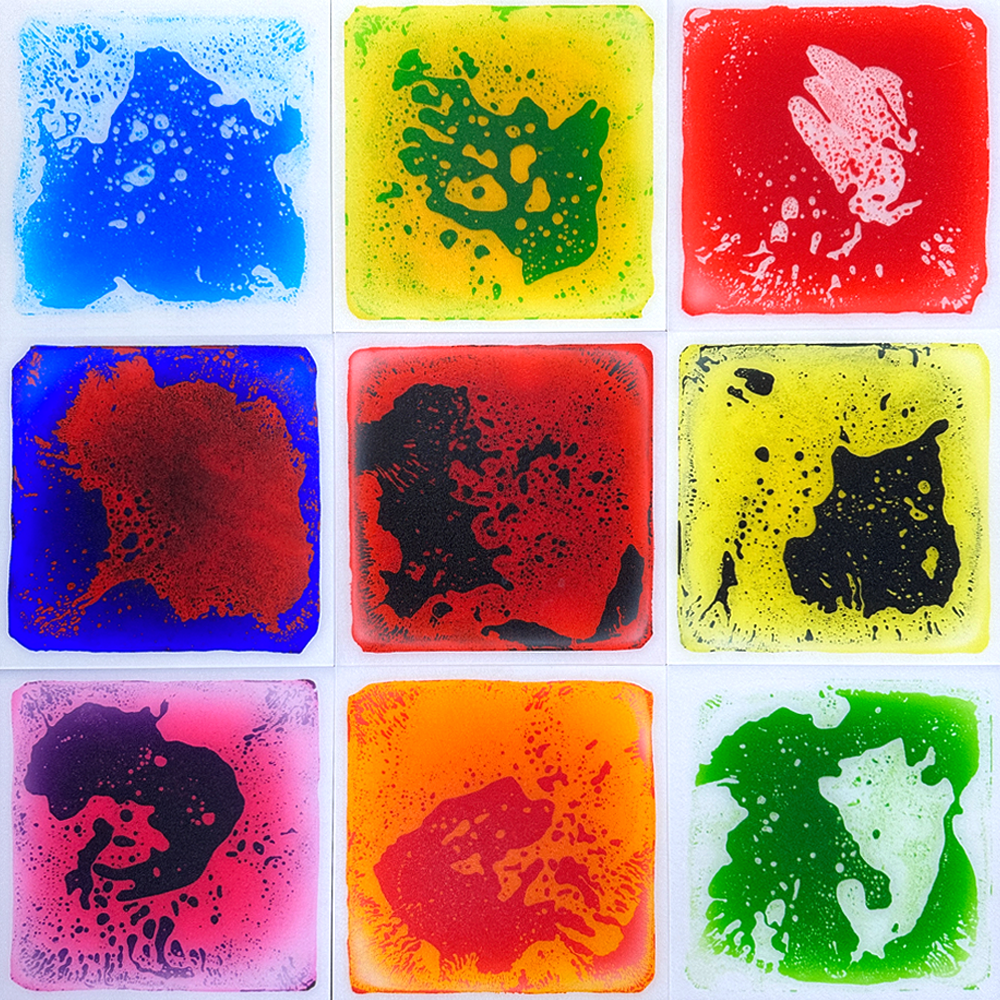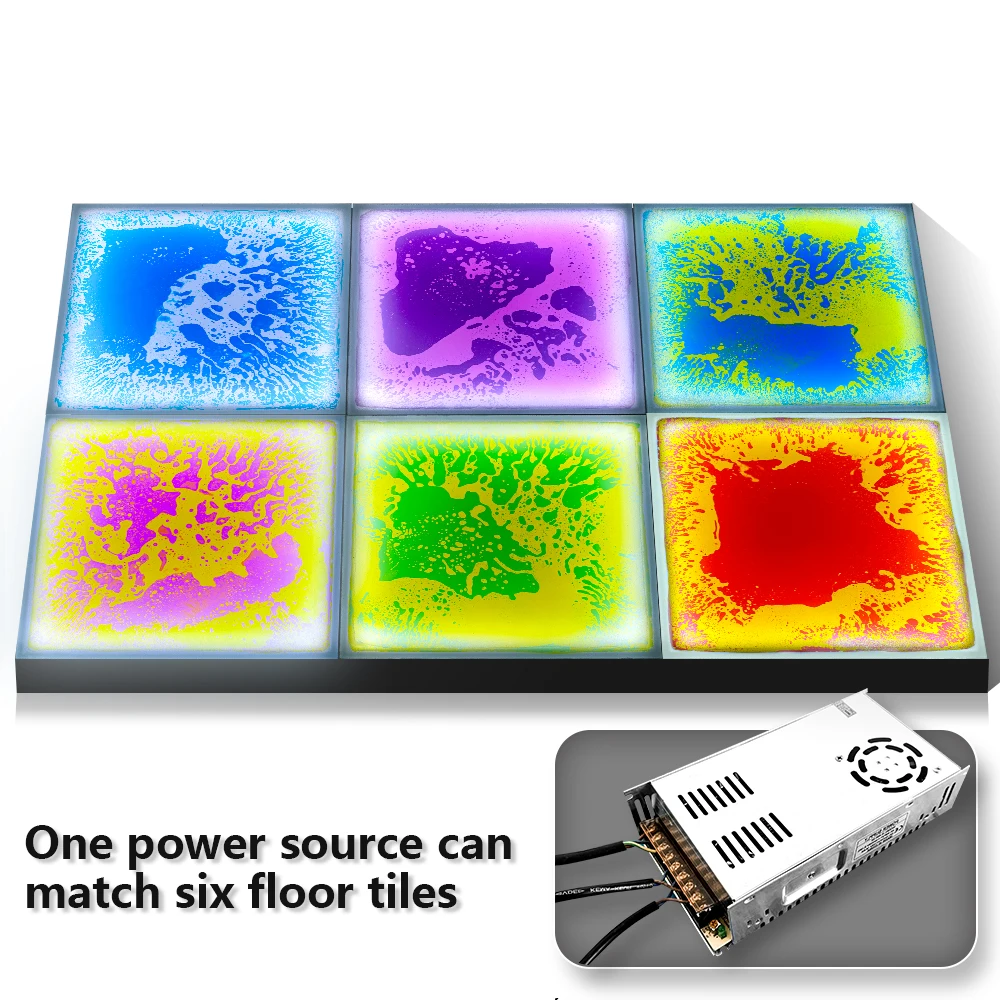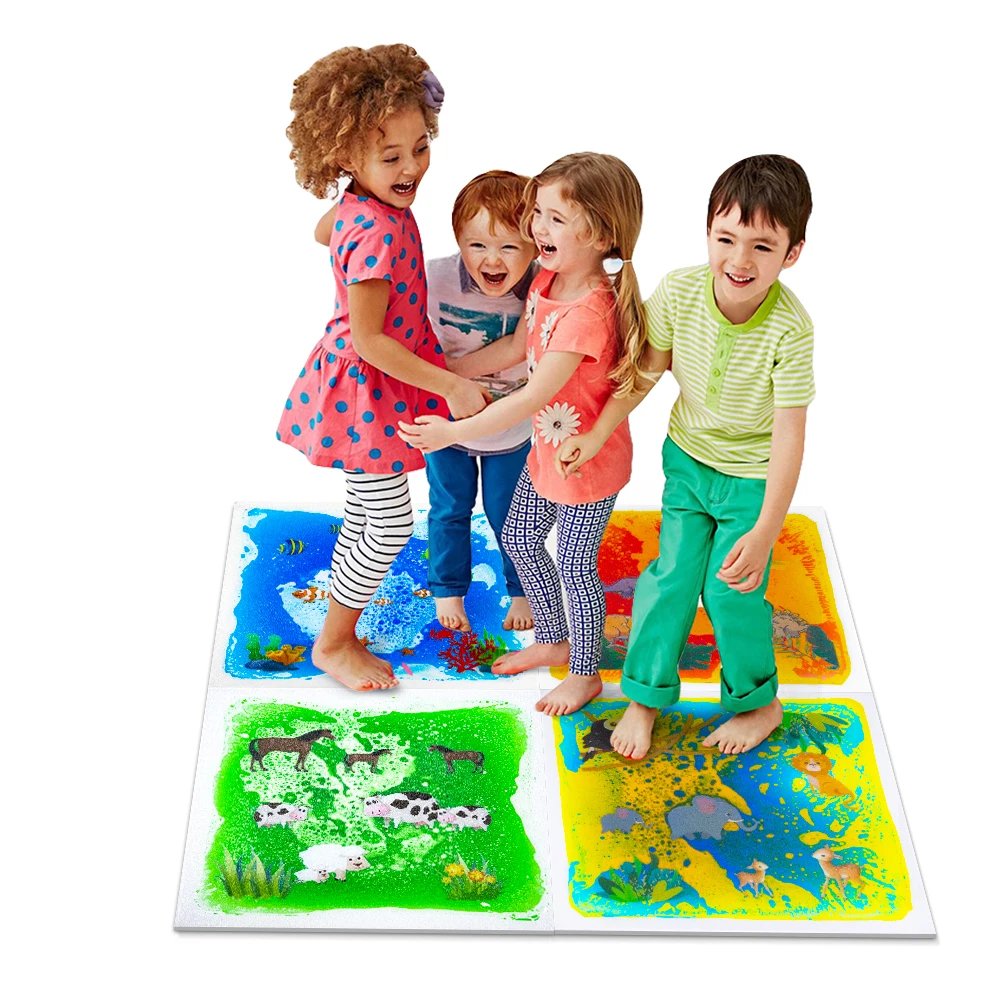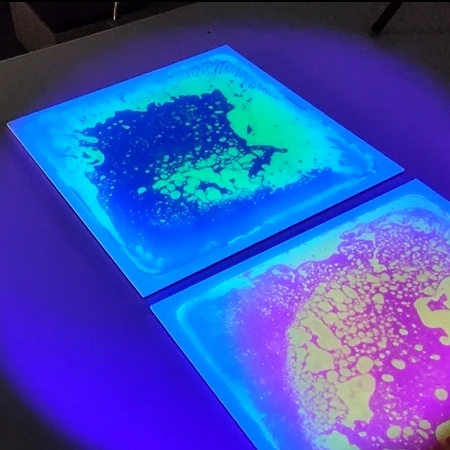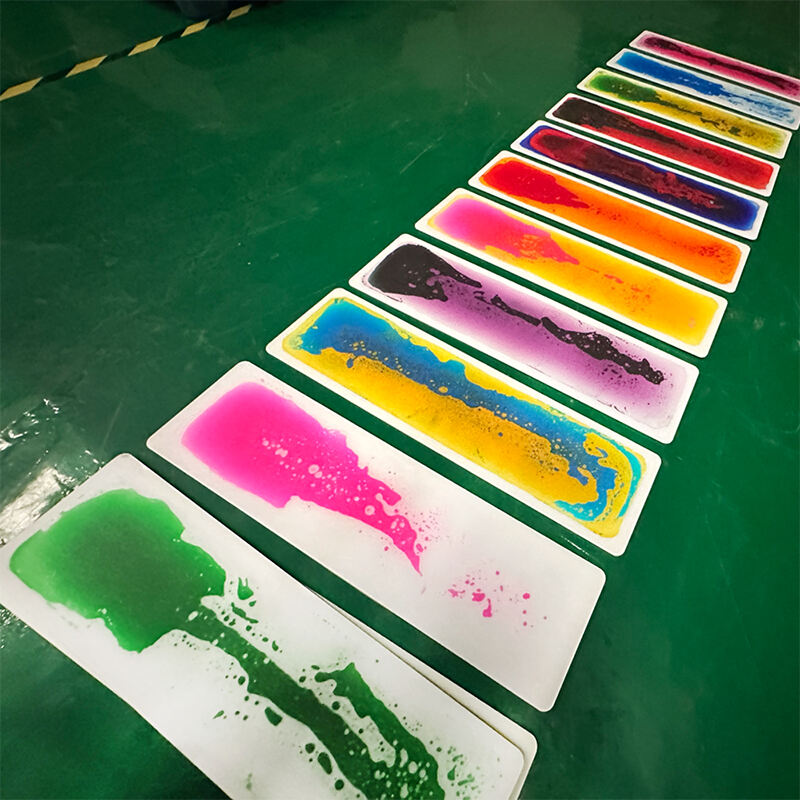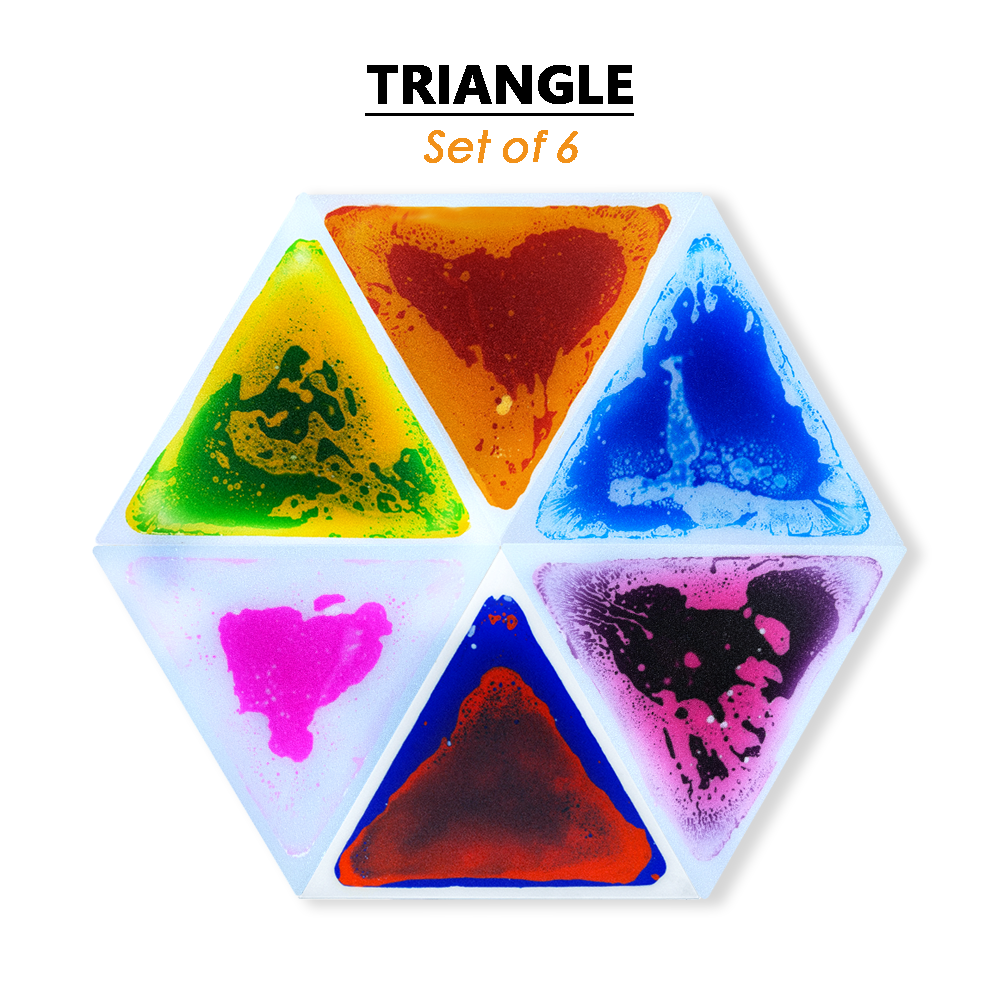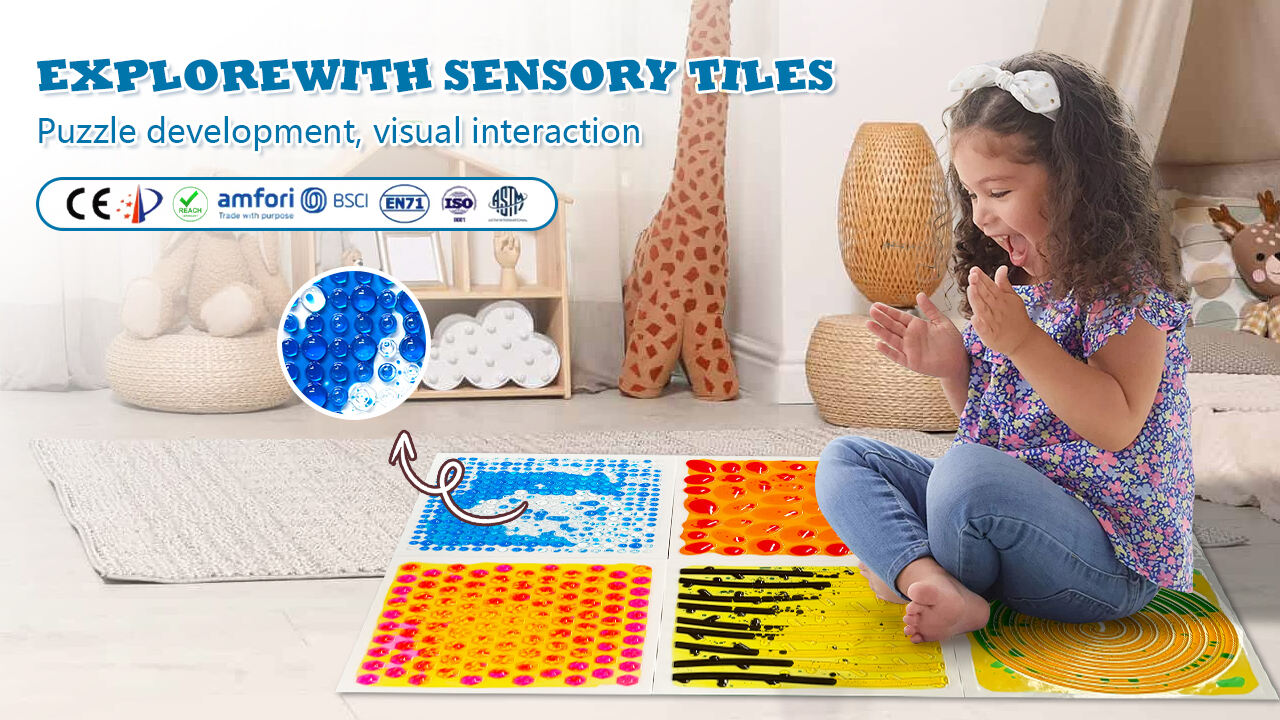
Sensory floor tiles filled with liquid really get kids moving with activities that require putting weight on different parts of their bodies, from jumping around to stomping feet and even crawling across them. These movements help build those important core muscles and improve how well limbs work together. Research published last year showed something interesting about preschoolers who spent just 20 minutes a day playing on these special floors. Their ability to coordinate both sides of their body jumped up by about 42 percent when compared to regular playground equipment. What makes these tiles so effective is how they react underfoot. When kids walk or run across them, the changing resistance makes them constantly shift their balance point, which actually helps develop those big muscle groups needed for things like running smoothly without tripping or making quick turns during games.
Sensory floor tiles with their unpredictable fluid movements present natural balancing challenges for kids. When little ones run after those colorful swirls on the floor, they're actually working on shifting their weight quickly and adjusting foot positions in ways that build dynamic balance skills. Occupational therapists have noticed something interesting too - about 74% of kids can stand on one leg longer after playing on these tiles for around eight weeks straight. All those tiny adjustments while running around help improve how the body senses its position in space, which is super important for coordination and overall motor development.
The liquid sensory tiles work by giving kids two types of sensations at once. When standing on them, the wobbly surface gives the inner ear a workout (that's the vestibular part), while jumping around compresses the joints and sends signals back from all over the body (proprioception). According to some recent research published in the Journal of Pediatric Therapy last year, this combo seems to boost kids' sense of where their bodies are in space by about 30 something percent. Pretty impressive stuff for something that looks like a fancy floor mat! Many occupational therapists get creative with these tiles, having children walk heel to toe across them or do balance challenges. Some even combine them with other therapy tools for maximum benefit, though results can vary depending on each child's needs.
A 12-week intervention at a Chicago early learning center incorporated liquid sensory tiles into an obstacle course format. Participants (n=32, ages 3–5) showed:
| Motor Skill | Improvement Rate | Assessment Tool |
|---|---|---|
| Dynamic Balance | 58% | PDMS-2 Stationary Scale |
| Locomotor Skills | 49% | TGMD-3 Run/Gallop Test |
| Object Control | 37% | TGMD-3 Strike/Catch |
Educators noted particularly strong gains in sideways shuffling and mid-air posture control–skills rarely targeted by static playground equipment.
Sensory floors made from liquid materials offer really engaging play spaces because they hit several senses at once. When kids walk on these floors, the surface moves like water and changes colors too. They get to see interesting patterns form, feel different textures underfoot, and experience resistance when stepping down hard. Occupational therapists have found that this kind of mixed sensory experience works wonders for brain development. According to some research published last year in the Journal of Pediatric Therapy, children who play on these floors process sensory information about 40 percent faster than those using regular toys that only stimulate one sense at a time. That's pretty impressive stuff for something that looks so much fun!
Sensory tiles with tactile features like varying temperatures and different textured edges help kids tell apart various sensory signals, which is really important for developing self regulation skills. Adding visual tracking elements such as colorful flow trails makes a big difference too. According to studies from the Child Development Institute back in 2022, children who struggle with processing disorders showed about 28% better ability to distinguish sensations when these visual cues were included. The combination of touch and sight actually strengthens those brain connections between what we sense and how our bodies respond.
Unlike static sensory walls, liquid floor tiles require whole-body engagement, triggering vestibular system activation through weight shifts and directional changes. Studies comparing play environments found:
| Activity Type | Sensory Integration Gains | Attention Span Improvement |
|---|---|---|
| Active (Movement-Based) | 62% | 48% |
| Passive (Stationary) | 29% | 15% |
Data from Developmental Psychology Review (2023) confirms movement-rich environments boost sensory integration by requiring real-time processing of changing tactile, visual, and spatial stimuli.
Play areas with those special liquid sensory floor tiles really boost brain connections because they hit several senses at once. Studies indicate around three quarters of brain growth happens after we're born according to Frontiers in Education from last year, and kids who engage with lots of different sensations tend to build better thinking skills and ways to process information. Kids get all excited when they walk across these responsive tiles that light up and feel different underfoot. Their brains start figuring out how to combine what they see, hear, and touch together, which turns out to be super important for doing well in school later on.
When kids play on these tiles, the fluid underneath gives them feedback about where their body is moving, which actually activates parts of the brain responsible for balance and movement control. Kids who jump around, spin, or make shapes with their feet are basically wiring new connections in their brains as they learn to match what they feel with what they see. Studies from Frontiers in Education back this up, showing such activities can boost both memory and how well kids understand space relationships. What makes this interesting is that it works similarly to some therapy methods therapists use with children who have different ways of learning and processing information.
More schools are getting on board with adaptive flooring lately. Education reports show around 40% of classrooms now have some sort of sensor-equipped floor since 2022 started rolling in. These liquid sensory tiles actually tackle two big issues at once. First, they give kids who think differently a way to stay engaged and stimulated during class time. At the same time, teachers find them really helpful for hitting those movement-based learning targets set out in most curriculums today. Teachers across the country are noticing something interesting too. When young children play on these special floors, their brains seem to connect better with what they're learning. It's like watching physical play translate directly into smarter thinking patterns developing right before our eyes.
Educational and therapeutic institutions are increasingly adopting liquid sensory floor tiles to create developmentally supportive environments. These interactive tools help address diverse learning needs while meeting safety standards for group settings.
Key installation considerations include:
| Factor | Special Ed Classrooms | Therapy Rooms |
|---|---|---|
| Usage Time | 45–90 min/day | 20–30 min/session |
| Cleaning | Daily disinfection | Post-session wipe |
| Positioning | High-traffic zones | Central open space |
Occupational therapists report a 67% improvement in bilateral coordination when using liquid tiles during 15-minute sessions (OTAP 2023). The responsive surface provides graded resistance that helps patients refine weight-shifting patterns, improve dynamic balance thresholds, and develop controlled force application.
Good design includes bright color contrasts around edges so people with visual impairments can navigate better. Play areas should combine fixed tiles with ones that can be moved around, plus offer different difficulty settings by rearranging modules. According to the latest Inclusive Play Spaces research from 2024, about a third to two fifths of any playground area needs dedicated to sensory equipment when serving mixed ability groups. That balance works best because it keeps things accessible without crowding out space where kids can play together.
 Hot News
2024-06-17
2024-06-17
2024-06-17
Copyright © 2024, Dongguan Hengfu Plastic Products Co., Ltd. All Rights Reserved Privacy policy
 EN
EN
 AR
AR
 BG
BG
 HR
HR
 CS
CS
 DA
DA
 NL
NL
 FI
FI
 FR
FR
 DE
DE
 EL
EL
 IT
IT
 JA
JA
 KO
KO
 NO
NO
 PL
PL
 PT
PT
 RU
RU
 ES
ES
 SV
SV
 CA
CA
 TL
TL
 ID
ID
 LT
LT
 VI
VI
 SQ
SQ
 ET
ET
 GL
GL
 TH
TH
 TR
TR
 FA
FA
 MS
MS
 GA
GA
 CY
CY
 UR
UR
 BN
BN
 GU
GU
 MR
MR
 NE
NE
 KY
KY